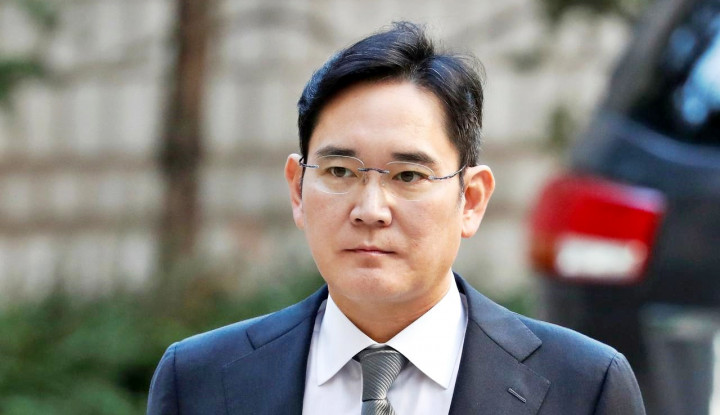

amynicole – South Korea’s Supreme Court has upheld a lower court ruling that acquits Samsung Chairman Jay Y. Lee of all fraud charges. The case involved allegations of stock manipulation and accounting fraud tied to a 2015 merger between two Samsung affiliates. Prosecutors claimed Lee artificially influenced share prices to ease the merger process and strengthen his control over the company.
Read More : Mark Zuckerberg Reaches Settlement in $8B Meta Lawsuit
An appellate court had dismissed the charges in 2024, stating that prosecutors failed to present sufficient evidence of wrongdoing. The Supreme Court’s ruling confirms that decision, closing a case that has spanned nearly a decade. Samsung’s legal team welcomed the outcome, saying the court confirmed the merger was lawful and expressing gratitude for the final ruling.
The legal battle has cast a shadow over Samsung’s leadership for years. The charges stemmed from Lee’s efforts to solidify his position following the merger of Samsung C&T and Cheil Industries. While the latest ruling brings closure to the case, it also highlights the long legal scrutiny faced by South Korea’s corporate leaders.
Lee’s legal troubles have drawn global attention since 2017. He was initially sentenced to five years in prison for bribery in connection with the same merger. The Supreme Court later overturned that verdict and ordered a retrial, which resulted in a reduced 30-month sentence. Lee served 18 months before receiving a presidential pardon from former President Yoon Suk Yeol.
Legal Win Allows Lee to Refocus on Samsung’s Business Challenges
Analysts view the Supreme Court’s decision as an opportunity for Jay Y. Lee to fully concentrate on Samsung’s business strategy. The ruling removes a key legal obstacle that has loomed over his leadership and the company’s long-term planning. One market analyst said the decision clears “a layer of legal uncertainty” that could have disrupted executive decision-making.
Lee now faces the challenge of navigating Samsung through a difficult market environment. Earlier this month, the tech giant reported a 56 percent drop in operating profit for the April-June quarter compared to the same period in 2024. Analysts attribute much of the decline to weak demand for AI chips, a sector where Samsung has invested heavily to compete with global rivals.
The ruling also comes at a time when Samsung is adjusting its focus on new technologies such as generative AI, advanced memory chips, and mobile innovation. With the legal case behind him, Lee is expected to play a more active role in shaping Samsung’s global strategy and addressing competition in the semiconductor market.
Read More : Amazon’s AI Expansion Puts Pressure on Sustainability Goals
Though expected, the Supreme Court’s ruling is a significant moment for Samsung’s leadership. It provides closure to one of South Korea’s highest-profile corporate trials and allows Lee to step more fully into his role. Moving forward, investors and industry observers will watch how Samsung adapts under Lee’s guidance in a rapidly evolving tech landscape.