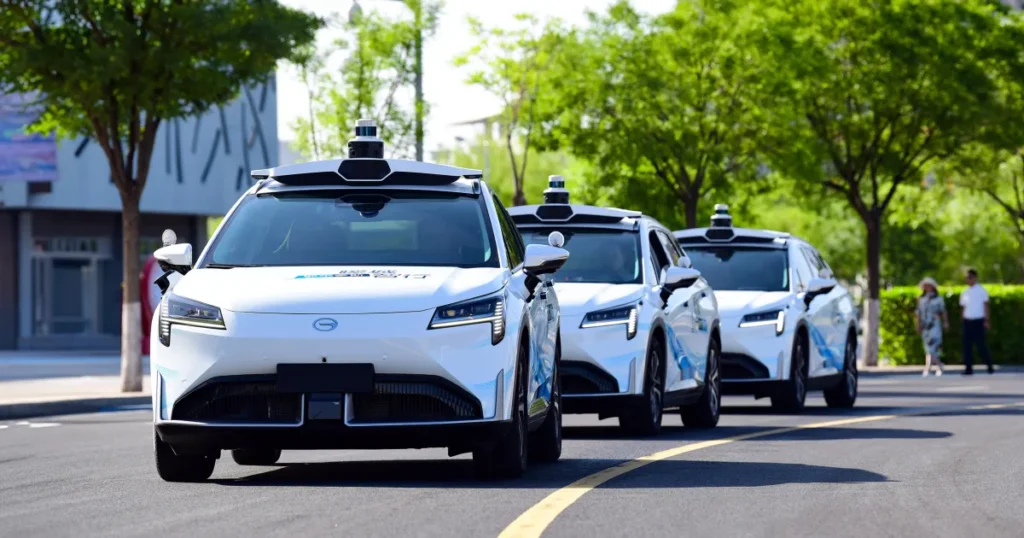

amynicole – Tesla has received approval from the Federal Communications Commission (FCC) to test its robotaxis against cellular hacking threats. The company plans to simulate radio frequency (RF) attacks to understand how its vehicles withstand potential malicious interference. This permission allows Tesla to perform “short-term testing of cellular vulnerabilities” outside its usual operational license area, which requires regulatory authorization.
Read More : Taiwan Coach Expresses Regret Over Blood Donation Pressure
The testing will take place near Austin, Texas, where Tesla launched 10 self-driving Model Y robotaxis in June 2025. Tesla filed for this special temporary authority (STA) on June 17. A few days before the public rollout of its robotaxi fleet. The FCC’s approval was granted on July 18 but backdated to June 20. Permitting Tesla to conduct tests until August 21.
Tesla’s application emphasized the importance of identifying and mitigating risks related to remote attacks. With autonomous vehicles relying heavily on wireless communications, understanding the resilience against RF attacks is crucial to protect passengers and ensure safe operations. The FCC highlighted the need for Tesla to coordinate with spectrum owners, such as Verizon and AT&T, if tests interfere within 50 miles of their licensed frequencies. This coordination is essential to avoid unintended disruptions of legitimate communication services.
The FCC also reminded Tesla that using jamming devices to block or interfere with authorized signals is illegal under federal law. Tesla’s testing, therefore, will focus on lawful methods to simulate attacks and gather data on its robotaxis’ security.
Implications and Industry Context of Tesla’s Testing
Tesla’s FCC-approved tests mark a proactive approach to addressing growing concerns about cybersecurity in autonomous vehicles. Remote car hacks have posed risks for years, with hackers demonstrating vulnerabilities in connected vehicles at cybersecurity conferences like Black Hat. Tesla’s move highlights the company’s awareness of such threats and its efforts to bolster defenses before scaling up robotaxi operations.
Unlike Tesla, other robotaxi providers such as Waymo rely on driving software that operates mostly offline, without dependence on cellular signals. This difference may reduce their exposure to cellular hacking risks. Tesla, however, depends on cellular connectivity for many functions, making these tests critical.
The tests also arrive amid increasing scrutiny over the security of connected electric vehicles. As hackers develop new attack methods, companies must continuously adapt to prevent breaches that could endanger passengers or disrupt services. Tesla’s initiative can serve as a model for the industry, encouraging other manufacturers to conduct similar tests. Ultimately, the results will help improve the cybersecurity framework for autonomous vehicles, ensuring safer and more reliable transportation options.
Read More : Meta Cites Legal Issues in Refusing EU GPAI Code Agreement
Tesla’s transparent approach to testing and cooperating with regulators signals its commitment to addressing cybersecurity proactively. These efforts will likely continue as robotaxi deployments expand in the United States and worldwide, fostering public trust in autonomous driving technologies.