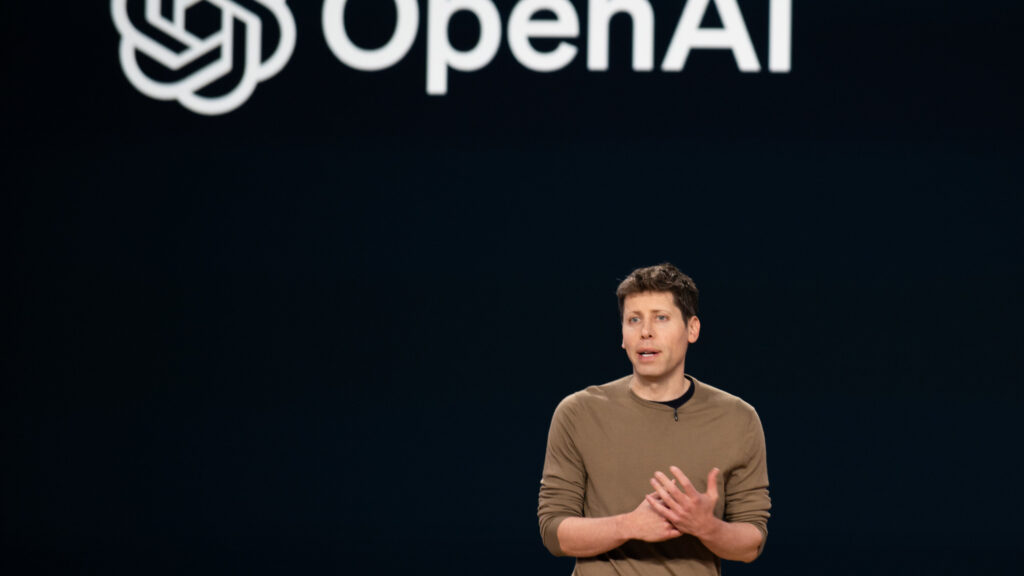

amynicole – Sam Altman is co-founding a new startup called Merge Labs to compete directly with Elon Musk’s Neuralink. Backed mostly by OpenAI’s ventures team, Merge Labs aims to develop advanced brain-computer interfaces (BCIs) powered by artificial intelligence. The company will raise funds valuing it at approximately $850 million. Altman will partner with Alex Blania, who previously worked on eye-scanning technology at World, another OpenAI-backed startup. However, Altman himself will not invest capital in Merge Labs.
Read More : Elon Musk Criticizes Apple Over xAI App Store Ranking
The name “Merge Labs” originates from a concept Altman introduced in 2017, describing “the merge” as the moment human brains and computers unite. Altman has shown long-standing interest in brain-machine integration and predicted that such advances could emerge by 2025, although this timeline was optimistic. Recent technological breakthroughs in implants and AI signal processing have reinvigorated efforts to create high-bandwidth BCIs. Merge Labs plans to leverage these advances to create devices that better connect human brains with computers.
Altman’s new company will enter a competitive field that includes Neuralink and other startups like Precision Neuroscience and Synchron. As these companies develop innovative technologies, they are expanding the possibilities of neural interfaces. Neuralink, for example, began human trials in early 2024, implanting its device in quadriplegic patients. The second subject reportedly can play video games and design in 3D using the neural interface, marking significant progress in BCI usability.
The Growing Rivalry and Future of Brain-Computer Technology
Merge Labs’ launch marks a notable intensification of rivalry between Altman and Musk, especially after Musk left OpenAI’s board in 2018. Both aim to push the boundaries of brain-computer integration but approach the challenge differently. Musk’s Neuralink has focused on surgical implants and high-precision electrodes, while Merge Labs plans to harness AI to enhance signal interpretation and device performance.
Neuralink’s recent human trials have generated encouraging results, showing potential applications in gaming and design for disabled users. However, challenges remain around safety, long-term effects, and regulatory approval. Merge Labs’ AI-driven approach could offer new solutions to these obstacles and broaden the scope of brain-computer technology.
Altman’s vision highlights the broader trend toward merging biological and digital intelligence. As BCIs evolve, they promise transformative impacts on healthcare, communication, and human capabilities. The competition between Merge Labs and Neuralink will likely accelerate innovation, benefiting the entire neurotechnology sector. Industry watchers will closely monitor how these companies progress and how regulatory environments adapt.
Read More : Russia Limits Voice Calls on WhatsApp and Telegram
Ultimately, Merge Labs’ success depends on its ability to balance cutting-edge technology with ethical and practical considerations. If it achieves its goals, it may reshape how humans interact with machines and unlock new potentials for brain enhancement and rehabilitation. This emerging field will continue to captivate scientists, investors, and the public alike in the coming years.