
amynicole – Peru’s government has reversed its decision to shrink the protected zone around the ancient Nazca Lines. The original protected area covered 5,600 square kilometers but was reduced to 3,200 square kilometers in late May. This reduction sparked criticism, as many feared it would expose the site to harmful activities. The culture ministry announced on Sunday that it would immediately reinstate the full protection of the 5,600 square kilometers. This move aims to safeguard the archaeological and environmental integrity of the Nazca region from informal mining and other threats.
Read More : Chinese Tech Firms Halt AI Tools to Stop Exam Cheating
The Importance of the Nazca Lines and the Region
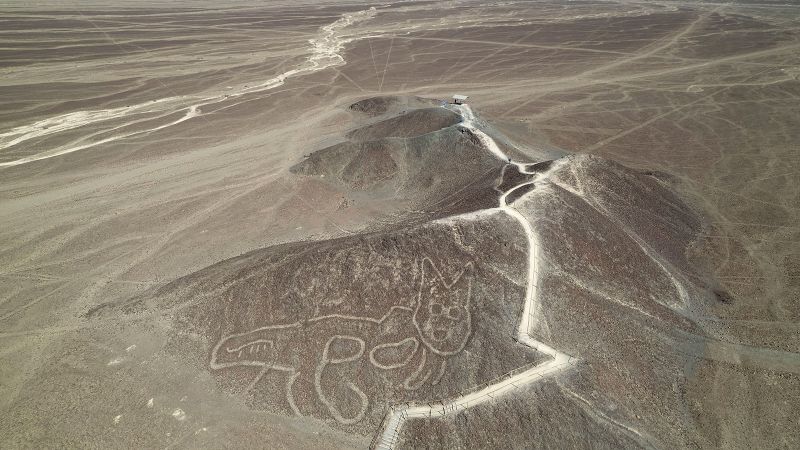
The Nazca region lies about 400 kilometers south of Lima and contains hundreds of pre-Hispanic artifacts. Its plateau is world-famous for the Nazca Lines, a series of over 800 enormous geoglyphs. These desert etchings depict animals, plants, and geometric shapes created more than 1,500 years ago. UNESCO declared the Nazca Lines a World Heritage site in 1994 due to their cultural and historical significance. The region’s archaeological value makes it essential to maintain strong protections against damage and exploitation.
Government Panel to Develop Future Zoning Plans
To address concerns and ensure better management, the culture ministry announced the formation of a technical panel. This panel will include government representatives, archaeologists, academics, and members from international organizations such as UNESCO. Their task is to build consensus and propose future zoning and land-use plans for the area. This collaborative approach aims to balance heritage conservation with sustainable local development. It also seeks to prevent illegal activities while promoting the site’s long-term preservation.
Concerns Over Mining and Environmental Impact
Critics of the earlier reduction warned that it would weaken environmental safeguards. They argued that scaling back the protected zone would open the Nazca Archaeological Reserve to informal and illegal mining. The timing raised alarms as international gold prices were rising, increasing the incentive for unregulated mining. Mining operations risk destroying archaeological artifacts and causing environmental degradation. These concerns drove public outcry and pressure on the government to reconsider the decision.
Ongoing Challenges with Illegal Mining in Nazca
According to Peru’s Ministry of Energy and Mines, 362 small-scale gold miners currently operate in the Nazca district under a program aimed at legalizing their activities. However, authorities have repeatedly taken action against illegal mining operations in the area. Luis Jaime Castillo, a former culture minister and archaeologist, highlighted the severity of the problem. He noted that the protected area was already heavily affected by illegal mining and mineral processing plants. Restoring full protection is a key step toward addressing these ongoing threats.