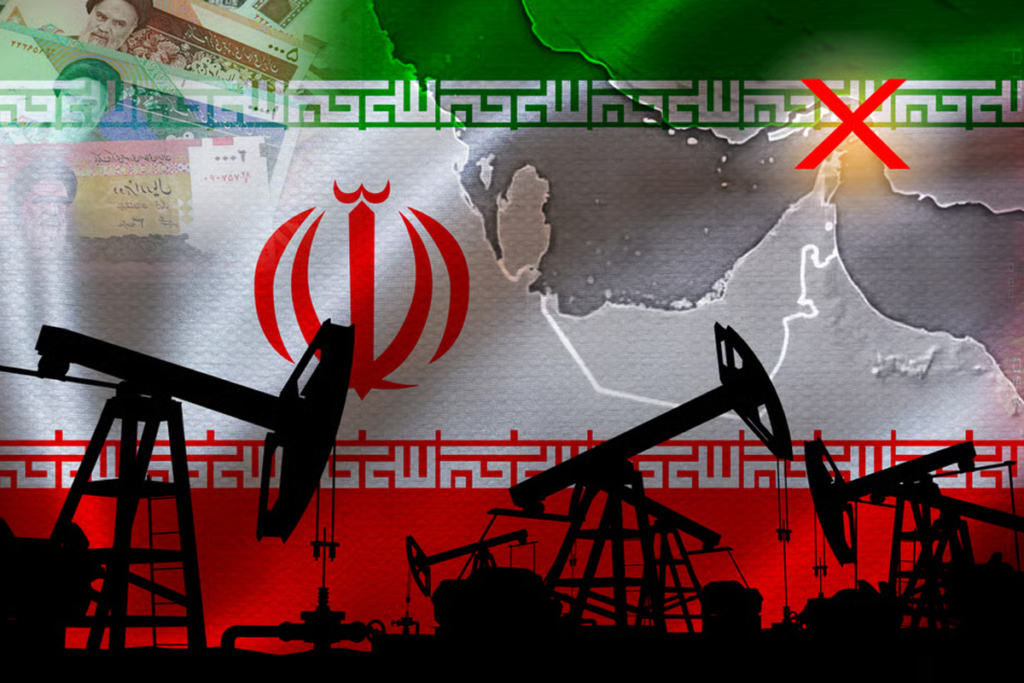

Strait of Hormuz Reopens as Nations Navigate the Economic Fallout of Middle East Tensions
amynicole – Global financial markets experienced a massive resurgence while crude oil prices fell sharply following a conditional two-week ceasefire agreement between the United States and Iran. The diplomatic breakthrough centers on reopening the Strait of Hormuz, a critical maritime chokepoint that facilitates nearly a fifth of the world’s daily oil consumption. This sudden de-escalation provided immediate relief to investors who previously feared a prolonged energy crisis and severe disruptions to Middle Eastern supply chains.
The announcement immediately cooled overheated energy markets. The global benchmark for oil plummeted 15% to just under $92 a barrel before stabilizing slightly, while US-traded crude settled around $96. Despite this sharp decline, energy costs remain significantly elevated compared to the pre-conflict baseline of $70 per barrel recorded before hostilities erupted in late February. The initial price surge stemmed directly from Iranian threats to target commercial shipping in the strait, a retaliation against US and Israeli airstrikes.
As oil prices retreated, stock exchanges worldwide surged on the renewed optimism. In the United States, the S&P 500 advanced 2.5%, and both the Dow Jones Industrial Average and the Nasdaq Composite closed 2.8% higher. European markets mirrored this enthusiasm; London’s FTSE 100 gained 2.5%, France’s CAC 40 leaped 4.5%, and Germany’s Dax soared 4.7%. Asian markets posted the most dramatic gains, with Japan’s Nikkei 225 jumping 5.4% and South Korea’s Kospi skyrocketing over 6.8%. Australia’s ASX 200 and Hong Kong’s Hang Seng also recorded substantial gains of 2.5% and 3%, respectively.
Read More : “Stock Markets and Oil Prices Stay Volatile on Iran War Fears“
The temporary truce materialized after intense public posturing. President Donald Trump announced the suspension of military action via social media, making the two-week pause contingent upon Iran ensuring the “COMPLETE, IMMEDIATE, and SAFE OPENING” of the Strait of Hormuz. This followed an ultimatum threatening catastrophic consequences if negotiators failed to reach a deal. In response, Iranian Foreign Minister Abbas Araghchi confirmed Tehran’s compliance, promising safe maritime passage provided that adversarial attacks on Iran cease.
Market analysts note that domestic political pressures heavily influenced this diplomatic pivot. Xavier Smith, a research director at AlphaSense, observed that Trump likely feared allowing energy prices to skyrocket further. Smith characterized a prolonged conflict as a potential “self-inflicted economic wound” that would threaten approval ratings.
While commercial vessels have begun trickling back through the strait, industry experts advise caution. Saul Kavonic, an analyst at MST Marquee, suggested that the passage of stranded oil tankers could offer short-term market relief. However, reports of isolated regional skirmishes persist. Pakistani Prime Minister Shehbaz Sharif publicly condemned these ongoing incidents, stating they actively undermine the spirit of the peace process.
The structural damage inflicted during the conflict presents a severe, long-term economic headwind. Iran strategically targeted vital energy infrastructure across the Gulf, causing substantial operational setbacks. Exxon reported a 6% drop in its Middle Eastern oil production for the first quarter compared to the previous year. Similarly, operators of Qatar’s Ras Laffan industrial hub—responsible for roughly 20% of global liquefied natural gas—warned that attacks slashed export capacity by 17%. Repairing these facilities will demand up to five years. Rystad Energy estimates the total regional infrastructure damage exceeds $25 billion, ensuring that supply constraints will persist well beyond the current ceasefire.
Asian economies bore the brunt of this geopolitical crisis due to their heavy reliance on Gulf energy imports. Surging jet fuel prices forced regional airlines to hike fares and slash flight schedules. Ichiro Kutani from Japan’s Institute of Energy Economics highlighted the acute vulnerability of developing Asian nations that lack domestic refineries or strategic petroleum reserves. “The ceasefire is good news for Asian countries,” Kutani stated, noting that while normalization is possible, the recovery timeline remains extended.
Ultimately, while the US-Iran ceasefire has injected immediate optimism into global equities and temporarily suppressed runaway oil prices, the foundation of this economic recovery remains highly fragile. Rebuilding the devastated energy infrastructure will require billions of dollars and years of labor, preventing a swift return to pre-conflict production levels. Until diplomats secure a comprehensive and lasting peace treaty, global energy markets will continue operating under the shadow of potential disruptions, requiring nations to aggressively diversify their energy supply chains to safeguard against future geopolitical shocks.
Read More : “Amazon Plans Distinct AR Glasses for Users and Drivers“