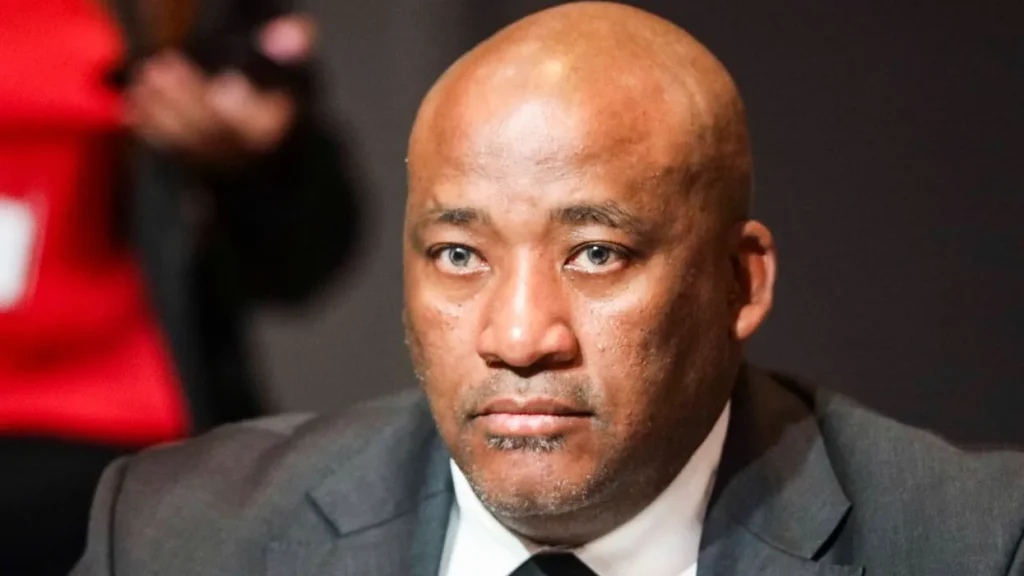

amynicole – South Africa’s sport, arts, and culture minister, Gayton McKenzie, faces an investigation for historical social media posts containing a highly offensive racial slur. The South African Human Rights Commission (SAHRC) ordered McKenzie to apologize. Undergo sensitivity training, donate to charity, and delete the posts. The posts, made between 2011 and 2017, contained the racial slur “kaffir,” which targets black South Africans.
Read More : AYN Thor Pricing and Design Options Officially Announced
McKenzie, a controversial anti-immigrant populist from the Coloured community, denied being racist and said he also identifies as Black. He admitted to posting “insensitive, stupid and hurtful things” years ago and expressed remorse, committing to cooperate with the investigation. Despite his apology, the SAHRC emphasized that the posts remain harmful as they are still accessible online.
The controversy emerged after a podcast episode by Open Chats described Coloured people as “crazy” and accused them of incest, stirring backlash. McKenzie’s Patriotic Alliance party, which mainly represents Coloured South Africans and secured 2% of votes in the 2024 elections. Filed complaints against the podcast with police and SAHRC.
Tshepo Madlingozi, SAHRC’s anti-racism commissioner. Highlighted that the use of the racial slur is unlawful and deeply offensive, reaffirming a Constitutional Court ruling. He stressed that the ongoing availability of these posts causes continued harm to affected communities.
The racial slur “kaffir” remains one of South Africa’s most severe insults, deeply rooted in the country’s apartheid history. The apartheid regime, which governed from 1948 to 1994, enforced racial divisions and designated mixed-race individuals as Coloured. Though given marginally better rights than Black Africans, the Coloured community still faced significant oppression.
Today, South Africa continues to classify its population into four racial categories: Black African, Coloured, Indian/Asian, and White. The 2022 census reported Coloured people constitute about 8.2% of the population. The apartheid strategy fostered longstanding tensions and divisions among these groups.
Historical Context and Social Implications of the Controversy
Gayton McKenzie insists he has never used the racial slur against anyone and claims the accusations form part of a political campaign. He stated publicly, “We are the victims,” during a Facebook Live session. Despite his denial, social commentators emphasize the broader context surrounding the use of such language. Especially from a prominent figure within the Coloured community.
Tessa Dooms, co-author of the book Coloured, explained that even if McKenzie’s comments were not intended to be derogatory, their impact is shaped by historical accusations of anti-blackness within some Coloured communities. She pointed out that apartheid policies deliberately cultivated anti-black attitudes to maintain divisions and control.
Jamil Khan, a researcher on Coloured identities at the Johannesburg Institute for Advanced Study, linked the ongoing tensions to South Africa’s segregated living conditions, a remnant of apartheid’s “divide and rule” strategy. Khan emphasized that many South Africans still live separately and remain unfamiliar with each other’s cultures and experiences.
Read More : Oracle Plans Gas-Powered Backup for Massive Data Center
This controversy underscores how colonialism and apartheid continue to influence social relations and identity politics in South Africa. The episode has reignited public debates about race, memory, and reconciliation, highlighting the challenges the country faces in healing its deeply fractured society.
As the SAHRC’s investigation proceeds, the outcome may set important precedents on accountability for public figures and the limits of acceptable speech in South Africa’s evolving democracy. The case also raises questions about how communities confront their painful histories while promoting unity and respect.