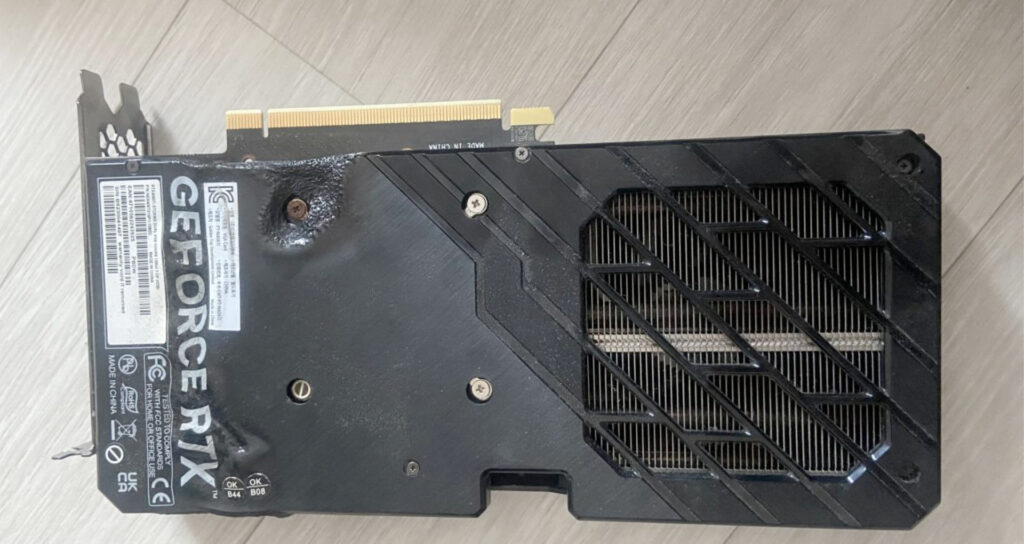

amynicole – A user recently experienced a fire and major damage to their EmTek StormX Dual RTX 4060 Ti GPU. The incident occurred without overclocking or extreme load, with PUBG being the most demanding game played. After two years of normal use, the computer suddenly shut down. When the user powered it back on, smoke appeared, followed by fire and visible melting. Photos revealed melted areas on the GPU’s backplate near the PCIe connector and burn marks on the motherboard’s PCIe slot.
Interestingly, the power cables and connectors showed no visible damage, suggesting the cause might not be related to external power issues. The system had undergone hardware changes before the incident: the user either replaced their motherboard with a refurbished one or swapped the refurbished board for a new one. Despite this, both the user and commenters doubt the motherboard caused the fire. Some suggest excessive screw torque or a manufacturing defect weakened the PCB, leading to a short circuit.
This case follows earlier reports of higher-end Nvidia GPUs experiencing cable or connector melting. However, the RTX 4060 Ti incident may indicate a unique manufacturing issue with the EmTek board partner. The melted plastic resembles ice cream in photos, hinting at a possible build flaw. The rarity of this event implies it might be isolated but raises questions about quality control. The user has sent the system to a repair shop and hopes for a replacement or repair. Many believe EmTek, as a trusted brand, should cover the damage, possibly even without charge.
What This Means for RTX 4060 Ti Owners and Future Safety
This fire incident marks a rare but concerning event for RTX 4060 Ti owners. While the card’s performance and features remain solid, potential buyers should note this case as a reminder to monitor hardware health closely. Manufacturing defects, especially in PCBs, can lead to dangerous failures even without user overclocking or abuse.
EmTek and Nvidia have not officially commented on this incident. However, the community expects the brand to respond responsibly by investigating the root cause and offering repairs or replacements to affected users. Warranty policies will likely come into focus, especially as users wonder if such damage falls under standard coverage.
The incident also underscores the importance of careful hardware installation. Over-tightening screws, using refurbished or non-certified parts, and ignoring signs of wear could increase risk. Users should ensure proper torque on screws and avoid mixing refurbished components without verification.
Looking forward, this event may prompt stricter quality checks and design reviews for RTX 4060 Ti and other Nvidia GPUs. Manufacturers might consider reinforcing PCB durability and improving thermal management to prevent short circuits and overheating. Meanwhile, consumers should watch for recalls or advisories related to their GPU models.
In conclusion, the RTX 4060 Ti fire appears to be a rare manufacturing or assembly defect rather than a systemic problem. Nevertheless, it highlights the need for vigilance in GPU care and for manufacturers to maintain high standards. Users experiencing similar issues should document damage and contact manufacturers promptly to explore repair or replacement options.