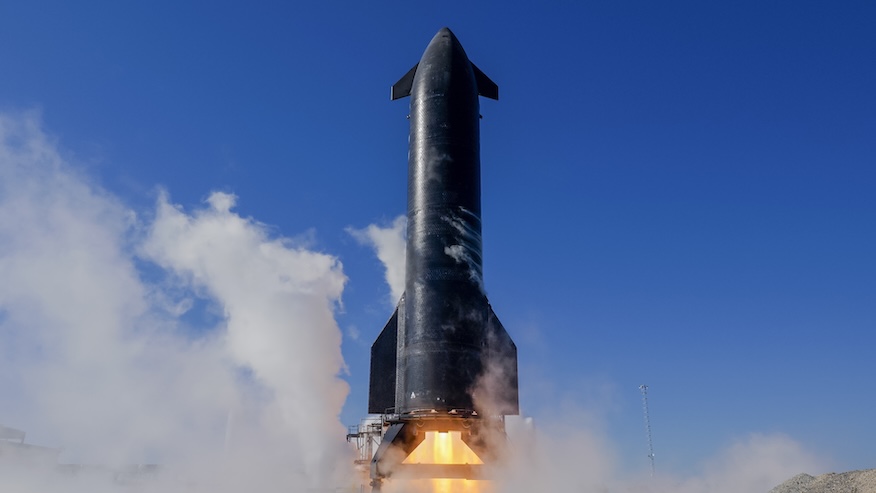

amynicole – SpaceX’s newest Starship prototype suffered a dramatic failure during its latest test flight, breaking apart over the Indian Ocean. The launch, which took place from the company’s Texas facility, was highly anticipated by space enthusiasts worldwide. Despite the setback, the Starship flew farther than previous attempts, marking incremental progress in SpaceX’s mission to develop the world’s most powerful rocket. However, the test flight ended with the rocket spinning out of control and disintegrating during re-entry. SpaceX described the event as a “rapid unscheduled disassembly,” a term it commonly uses to describe failure. Elon Musk remains optimistic, pledging to accelerate the pace of launches despite recent challenges.
Read More : Is India Beating Maoist Rebels After Years of War?
Super Heavy Booster Explodes, Upper Stage Fails to Deploy Payload
The test flight encountered problems shortly after liftoff when the first-stage Super Heavy booster exploded instead of performing a planned splashdown in the Gulf of Mexico. This failure was followed by issues with the upper-stage Starship. Which failed to open its payload doors to release Starlink satellite simulators. The rocket experienced leaks and instability as it coasted on a suborbital trajectory, spinning uncontrollably before atmospheric re-entry. These failures disrupted the mission’s objective to test Starship’s operational capabilities but provided crucial data for SpaceX engineers to improve future designs.
Launch From Starbase Texas Amid Heightened Safety Measures
The launch took place at 6:36 pm local time from SpaceX’s Starbase facility near Boca Chica, Texas. This location recently voted to become an official city named Starbase, emphasizing SpaceX’s growing influence in the region. Federal regulators cleared the launch just days prior, following an investigation into earlier flight failures that grounded the Starship for nearly two months. To ensure safety, the FAA expanded debris hazard zones around the rocket’s ascent path, protecting commercial air traffic and nearby residents. Despite precautions, SpaceX continues to face significant risks inherent in testing such a large and complex launch vehicle.
Enthusiasts and Experts React to the Latest SpaceX Setback
The launch attracted dozens of space fans who gathered at nearby viewing spots to witness history in the making. Among them was Australian Piers Dawson, who planned his family vacation around the launch. Another enthusiast, Austin-based tech entrepreneur Joshua Wingate, expressed excitement despite the failure, emphasizing the learning aspect of such tests. Musk himself was visible during the launch, wearing an “Occupy Mars” T-shirt and encouraging fans to stay tuned for future flights. SpaceX’s transparent live streams and Musk’s public optimism continue to galvanize the space community.
Elon Musk Commits to Faster Launch Cadence Amid Ongoing Challenges
Despite the latest failure, Elon Musk announced plans to increase the launch cadence for Starship, aiming for flights every three to four weeks. This aggressive schedule reflects SpaceX’s commitment to rapidly iterate and improve the rocket’s design. Musk did not clarify if SpaceX would still provide its planned Mars live stream, but his focus remains on pushing Starship development forward. The company’s persistence in the face of setbacks signals its ambition to make Starship a reliable vehicle for future Mars colonization and other space missions. Each test, success or failure, brings SpaceX closer to achieving this goal.