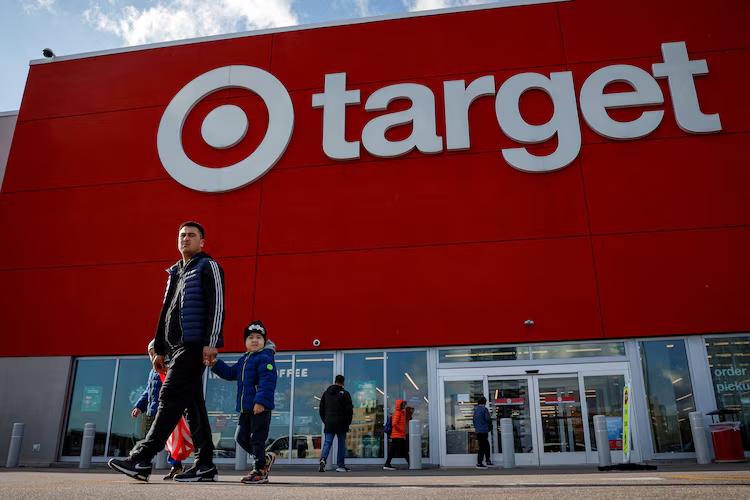

amynicole – Target has significantly reduced its expectations for the year after a sharp 5.7% decline in sales. The company cited a “highly challenging environment,” partly due to the ongoing impact of trade tariffs. The retail giant’s struggles come at a time when its decision to end diversity, equity, and inclusion (DEI) targets has also drawn backlash, further complicating the situation.
Target’s drop in sales signals that both external factors, like tariffs, and internal decisions, such as changes in DEI policies, are affecting its performance. The company has now lowered its forecast for annual sales growth. Expecting a slight decline instead of the previously anticipated increase.
Read More : Apple’s Sir Jony Ive Joins OpenAI to Shape the Future
Impact of Trade Tariffs on Target’s Business
One of the main challenges affecting Target is the higher cost of imported goods due to trade tariffs. The company sources many of its products, including home goods and beauty items, from China. Despite reducing its reliance on Chinese imports from 60% in 2017 to 30% now. Target still faces higher import taxes, which have pressured its margins.
The tariffs, originally introduced during President Donald Trump’s administration, were designed to encourage businesses to buy more American-made goods. However, the tariffs have led to higher prices for consumers. Target has not confirmed whether it will raise prices as a result, calling price hikes a “last resort.” Instead, it plans to explore sourcing more products from the U.S. and reducing dependence on China.
Target’s Strategy to Mitigate Tariff Costs
Target is working on several strategies to manage the impact of higher import taxes. CEO Brian Cornell emphasized the importance of sourcing more products from within the U.S. and negotiating with suppliers to offset some of the additional costs from tariffs. The company is also expanding its supplier base beyond China, which should help lower its exposure to tariffs.
Rick Gomez, Target’s chief commercial officer. Stated that the company is adjusting its order timing and quantities to minimize the financial impact of higher tariffs. These efforts are expected to significantly reduce the extra costs that the company faces due to the ongoing trade policies.
Comparison with Walmart and Market Challenges
Unlike its competitor Walmart, which derives most of its revenue from essential goods like food and household items. Target’s revenue largely comes from non-essential products such as furniture and beauty items. These categories are more vulnerable to shifts in consumer spending, especially in times of economic uncertainty.
Walmart, facing similar tariff pressures, has already announced price increases. This move prompted a response from Trump. Who suggested that Walmart should absorb the tariff costs instead of passing them on to consumers. The difference in strategy highlights how companies are handling the effects of trade policies in different ways.
DEI Policy Changes and Public Backlash
Target’s decision to end its DEI targets also played a role in its recent performance struggles. This decision followed a significant backlash over LGBTQ+ merchandise in its stores, which sparked boycotts and negatively impacted sales and stock prices. The company faced a lawsuit from shareholders, accusing it of concealing risks related to its DEI initiatives.
CEO Brian Cornell acknowledged that these changes had some impact on the company’s performance but did not provide specific details on the financial consequences. This ongoing controversy adds to the complex challenges that Target is facing, as it navigates both external market conditions and internal policy shifts.
As Target adjusts its strategies and focuses on new business goals, it remains to be seen how these changes will affect the company’s future performance and its position in the retail industry.