
amynicole – Uber has announced that it is fully prepared to launch driverless taxis in the United Kingdom. However, the UK government has delayed the expected timeline for legal approval. The previous administration had stated that fully autonomous cars could be on public roads by 2026. But the current government has moved that estimate to the second half of 2027.
Although some self-driving technology is already legal in the UK, current laws still require a human driver to remain behind the wheel. This driver must stay alert and ready to take control at any time. Uber’s leadership, including Senior Vice President Andrew Macdonald, says they are ready to launch robotaxi services immediately. However, they are waiting on the necessary regulations to allow a fully autonomous operation.
Macdonald joined a journalist for a demo ride through London in a Ford Mach-e equipped with AI systems developed by British tech company Wayve. He emphasized that Uber is working with 18 automated vehicle firms and remains committed to bringing the service to the UK. The company already operates robotaxis in countries such as the United States, China, the United Arab Emirates, and Singapore.
Despite international progress, Uber argues the UK is not falling behind. According to Macdonald, the US and China are ahead mostly because the core technologies were developed there. The Department for Transport confirmed it is working toward implementing new self-driving laws by late 2027. The department also mentioned potential short-term trials and pilot programs to help the industry grow.
Read More : New Buy Now, Pay Later Rules Introduced to Safeguard Shoppers
Inside the Ride: Testing Uber’s Robotaxi on London Streets
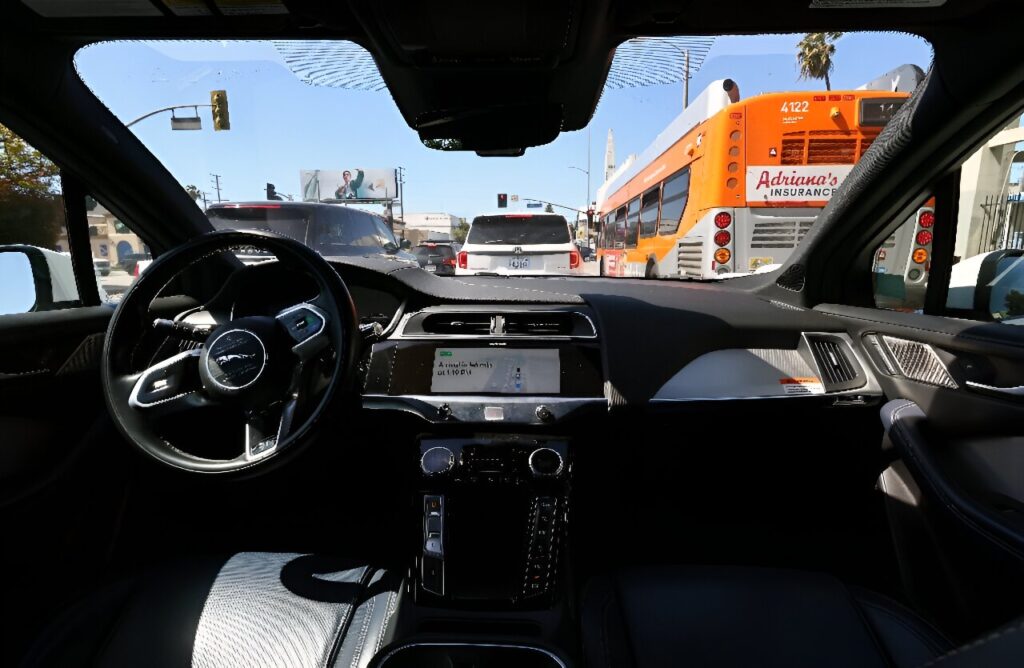
A test ride through central London showcased the capabilities of Wayve’s autonomous vehicle system. The car used radar and seven onboard cameras to monitor its surroundings. A powerful computer in the boot processed data in real time, controlling the vehicle’s actions.
During the ride, the AI system smoothly navigated through challenging city conditions. These included heavy traffic, delivery bikes, roadworks, pedestrians, and parked vehicles. George, the human safety driver onboard, never touched the controls. The emergency shutoff button, designed to deactivate the AI instantly, was never needed.
The ride felt calm and deliberate. The car maintained safe distances and made cautious turns. Compared to an average human driver, it was more patient and far less reactive. The experience reflected Uber’s claim that robotaxis can offer a safer and more reliable journey.
Macdonald believes the public will quickly adapt to this new mode of travel. Although some passengers may initially feel nervous, he says the feeling usually fades after one or two rides.
Public Hesitancy and Global Safety Concerns Remain
One of the biggest barriers to public adoption is trust. A 2024 YouGov poll revealed that 37 percent of UK residents would feel very unsafe in a driverless car. Although Uber claims confidence grows with experience, public opinion remains cautious.
Robotaxis in the US operate up to 20 hours a day, every day of the week. They charge the same fare as human-driven rides, and users can choose whether to take them. Despite this, various incidents have raised safety concerns. In one case, a man was trapped in a robotaxi that circled an airport car park. In another, General Motors suspended its Cruise service in San Francisco due to safety issues.
While studies suggest that self-driving vehicles are involved in fewer accidents than human drivers, each failure draws heavy scrutiny. Uber acknowledges that even one accident is too many, but notes that human drivers are not perfect either.
Legal and Ethical Questions Still Unanswered
The shift to autonomous vehicles brings more than just technical challenges. It also creates complex legal and ethical issues. Questions remain about who is responsible during an accident. Is it the car manufacturer, the software developer, the ride-hailing platform, or the passenger?
Tom Leggett from Thatcham Research emphasizes that safety must be the top priority. He also says insurers and investigators need full access to vehicle data. This transparency is essential for resolving disputes and understanding what went wrong when accidents occur.
The UK government sees huge potential in the self-driving sector. It estimates the industry could be worth £42 billion and create up to 38,000 jobs by 2035. However, it also recognizes the disruption this could cause for existing jobs in transport.
GMB union official Andy Prendergast warns that the social impact must be carefully managed. As automation increases, thousands of drivers could face reduced hours or unemployment.
A Glimpse Into the Future of Everyday Travel
Despite the setbacks and open questions, Uber believes autonomous vehicles are the future of transportation. Macdonald is confident that within a decade, many young people will never need to learn to drive. He sees self-driving cars as a standard part of daily travel.
He also highlighted the benefits of robotaxis in terms of efficiency, safety, and convenience. With no need for breaks, rest periods, or driver pay, these vehicles can run continuously and reduce costs over time. The flexibility also allows ride-hailing platforms to offer consistent service levels in areas where driver shortages occur.
Although the road to full adoption is longer than first expected, progress is steady. With laws expected to change in 2027, and with ongoing trials, the UK could soon join the countries already using autonomous ride services. If safety standards are met and public trust grows, robotaxis may soon become a regular feature on British roads.