
amynicole – Nissan has announced it is open to sharing its global manufacturing facilities with Chinese state-owned partner Dongfeng. This move comes as the Japanese carmaker seeks to reduce costs and reshape its global operations. In an interview with the BBC, Nissan said it may bring Dongfeng “into the Nissan production eco-system globally.” The two companies have worked together for more than two decades and currently co-produce vehicles in Wuhan, China.
This new strategy follows a series of financial setbacks for Nissan. Including declining sales in major markets like the U.S. and China. As a result, the company is looking for ways to boost efficiency and improve profitability. Factory sharing with Dongfeng could allow Nissan to reduce its overhead costs and increase its competitiveness in a challenging global market.
Job Cuts and Factory Closures Hit Nissan’s Global Workforce
Nissan plans to lay off 11,000 employees and shut down seven factories worldwide. Though the company has not yet revealed specific locations. These cuts follow 9,000 layoffs announced last November. Bringing the total number of job losses to 20,000—about 15% of its global workforce. The restructuring is part of Nissan’s plan to reduce production by 20% in an effort to streamline operations and cut losses.
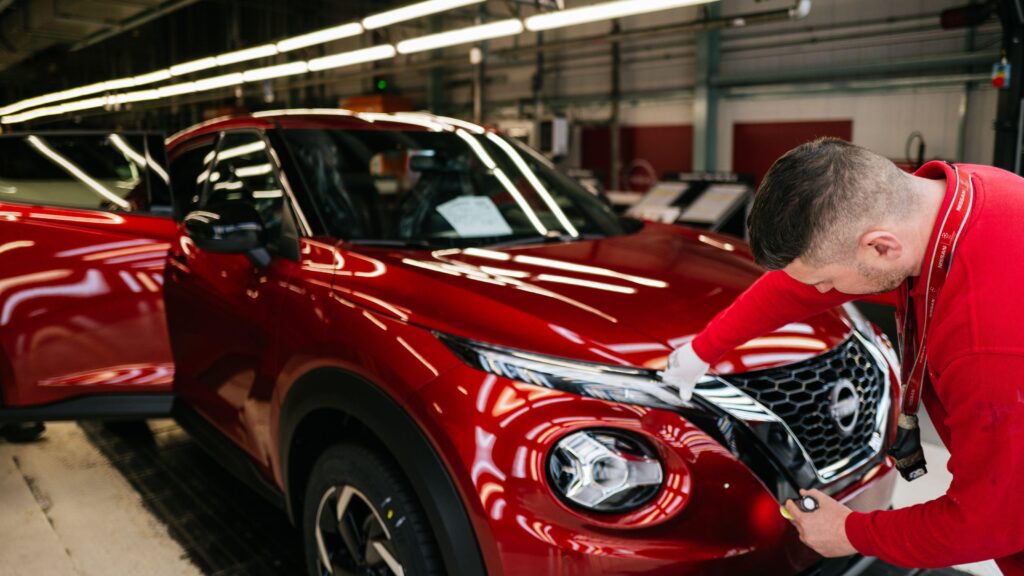
Despite the cuts, Nissan confirmed that its UK plant in Sunderland remains secure for now. Speaking at a Financial Times conference, Nissan executive Ivan Espinosa said the company is launching new models in Sunderland and has no current plans to reduce operations there. The plant, which employs around 6,000 people, is a key part of Nissan’s European manufacturing network.
Read More : Walmart Says Prices May Rise This Month Due to New Tariffs
Weak Sales in Key Markets Push Nissan to Rethink Strategy
Nissan has been struggling with falling sales, especially in the United States and China. In China—the world’s largest car market—the company has had difficulty gaining market share due to strong competition and lower prices. This has put added pressure on Nissan to find new ways to stay relevant and profitable.
Partnering more closely with Dongfeng could help Nissan improve its position in China. By using shared resources and combining production efforts, the two companies may be able to cut costs and respond more quickly to market changes. It’s a strategy that could help Nissan recover from its recent financial challenges.
Leadership Changes Follow Failed Merger Talks with Honda
Nissan has also faced internal instability, including failed merger discussions with Honda earlier this year. The proposed multi-billion-dollar deal fell apart in February due to disagreements between the two companies. Soon after, then-CEO Makoto Uchida stepped down and was replaced by Ivan Espinosa, who previously led Nissan’s planning and motorsports divisions.
These leadership changes come at a critical time as the company tries to rebuild trust with investors and reset its global strategy. Espinosa is expected to focus on simplifying operations and pushing for more innovation, particularly in electric vehicles and sustainable technologies.
UK Battery Investment Offers a Boost for Nissan’s EV Plans
While the company faces global restructuring, Nissan’s future in the UK appears more stable, especially with new investment in battery production. Its battery partner, AESC, secured a £1 billion ($1.3 billion) funding deal from the UK government to build a new battery plant in Sunderland. The facility will support electric models like the Juke and Leaf.
UK Chancellor Rachel Reeves visited the site and highlighted the project’s potential to create high-quality, well-paid jobs in the region. The investment aligns with Nissan’s broader push into electric vehicles, a segment where the company hopes to regain momentum. The new battery plant signals long-term confidence in Sunderland and reinforces the UK’s role in Nissan’s electrification strategy.